

- Blog
- 03 Jan 2026
In Pakistan, Canine Parvovirus (CPV) remains one of the most significant threats to dog health, particularly during seasonal transitions. Due to the high density of stray animals and environmental resilience of the virus in our climate, a proactive approach is the only way to ensure your pet's safety.
Why Parvo is Persistent
-
Environmental Survival: In cities like Lahore, Karachi, and Islamabad, the virus can survive in soil or on pavements for over a year, resisting the intense summer heat and monsoon humidity.
-
High Viral Load: Many public parks and green belts have high "viral loads" due to the presence of unvaccinated stray populations.
-
Maternal Antibody Interference: Many puppies in Pakistan are born to mothers with unknown vaccination histories, making the timing of their first shots critical.
1. Recognition: The "Red Flag" Symptoms
If your dog shows these signs, do not wait. In Pakistan's climate, dehydration happens rapidly.
-
The "Parvo Smell": A distinct, very foul, metallic-smelling bloody diarrhea.
-
Projectile Vomiting: Frequent and severe, leading to immediate lethargy.
-
Refusal of Water/Food: A normally playful puppy suddenly becoming "dull" and retreating to a corner.
-
Tucked-up Abdomen: Showing signs of intense stomach pain.
2. Prevention: The 3-Step Defense
A. The Vaccination Schedule
Do not settle for a single "7-in-1" or "9-in-1" shot. Puppies require a series to be protected:
-
6–8 Weeks: First Dose (PUPPY DP or DHPP)
-
10–12 Weeks: Second Dose (Booster)
-
14–16 Weeks: Third Dose (Final Puppy Booster)
-
Annual Booster: Essential every year to maintain immunity.
B. Strict Quarantine
Until 10 days after the final 16-week booster, your puppy should not touch the ground in public places.
-
Avoid "walking" them in public parks or streets.
-
If you must take them to a clinic, carry them in a crate or your arms; do not let them sniff the clinic floor.
C. Effective Disinfection
Most common household floor cleaners used in Pakistan do not kill Parvo.
-
The Bleach Solution: Use a 1:30 dilution of household bleach and water.
-
Application: Spray on gates, tires, and floors. Let it sit for at least 10 minutes before rinsing.
3. What to Do If Your Dog is Infected
Immediate Actions
-
Isolate: Move the sick dog away from all other pets immediately.
-
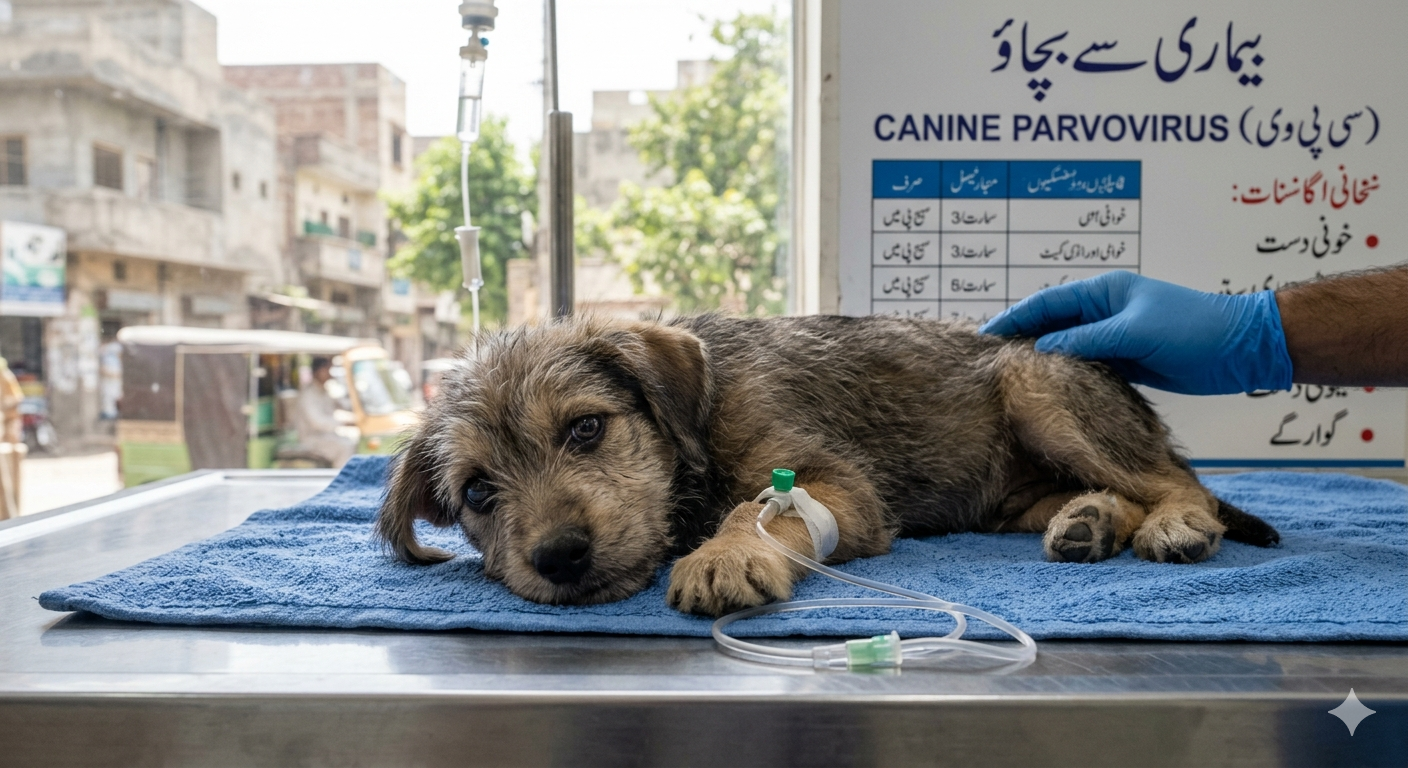
No Home Remedies: Many owners try "home "fluids" or traditional remedies; however, Parvo requires intravenous (IV) support because the stomach cannot absorb oral liquids during infection.
-
Seek Professional Help: Visit a facility with a dedicated isolation ward (such as specialized hospitals in Lahore or Karachi) to prevent spreading the virus to other patients.
Treatment Expectations
Standard veterinary care in Pakistan usually involves:
-
Aggressive IV Fluid Therapy to balance electrolytes.
-
Injectable Anti-emetics to stop vomiting.
-
Antibiotics to prevent secondary infections (Sepsis).
-
Nutritional Support via feeding tubes if necessary.
Summary for Pet Owners
|
Action |
Importance |
|---|---|
|
Vaccination |
10/10 - The only reliable way to prevent death. |
|
Hygiene |
9/10 - Use bleach; other cleaners are often ineffective. |
|
Early Detection |
10/10 - Treatment started on Day 1 has an ~85% success rate. |
What exactly is Parvovirus?
Canine Parvovirus (CPV) is a viral illness that primarily attacks a dog’s gastrointestinal tract and immune system. It is incredibly hardy, meaning it can survive on Lahore’s streets, in soil, and even on your shoes for months.
The 5 Warning Signs You Must Never Ignore
If your puppy or unvaccinated dog shows any of these signs, consider it a medical emergency:
-
Extreme Lethargy: Your once-playful puppy is suddenly too tired to move or lift its head.
-
Loss of Appetite: Complete refusal of food or even their favorite treats.
-
Persistent Vomiting: Frequent vomiting, often clear or frothy.
-
Bloody Diarrhea: Severe, foul-smelling diarrhea that often contains dark or bright red blood.
-
Fever or Low Temp: Your pet feels unusually hot or dangerously cold to the touch.
Why is Parvo so common in Lahore?
The virus spreads through contact with infected feces or contaminated environments. Because Lahore has a high population of community (stray) dogs and many pets aren't fully vaccinated, the virus lingers in public parks and on sidewalks. One quick sniff during a walk is all it takes for an unvaccinated puppy to get infected.
The "Survival Kit": What to do immediately
If you suspect Parvo, seconds count.
-
DO NOT wait: A puppy can go from "a bit tired" to critical in less than 12 hours.
-
DO NOT try home remedies: Common myths like feeding "Ghar ka totka" or simple "Khurak" will not work. Parvo requires professional IV fluids and specialized medicine.
-
DO isolate your pet: Keep them away from other dogs to prevent the spread.
-
DO call Vets4Pets Lahore: We offer 24/7 emergency support and specialized isolation wards to give your pet the best chance of survival.
The Only Real Cure is Prevention
The good news? Parvo is almost 100% preventable through a proper vaccination schedule.
-
First Shot: 6-8 weeks of age.
-
Boosters: Every 2-3 weeks until the puppy is 16 weeks old.
-
Annual Booster: Once a year for adult dogs.
We Are Here to Help
Don't let your companion become a statistic. Whether you need an immediate test or want to start your puppy’s vaccination journey, our team of qualified DVM doctors is ready to assist you.